Commercial kitchen equipment is a significant investment for any restaurant, hotel, or catering business. Proper maintenance not only extends the lifespan of your equipment but also ensures consistent performance, reduces energy costs, prevents costly breakdowns, and maintains food safety standards.
At MightyChef, we've been manufacturing commercial kitchen equipment for over 15 years. Based on our experience, here are comprehensive maintenance tips to help you get the most out of your kitchen equipment investment.
Why Equipment Maintenance Matters
Regular maintenance offers numerous benefits for your foodservice operation:
- Extended lifespan — Well-maintained equipment can last 50% longer than neglected equipment
- Reduced repair costs — Preventive maintenance costs a fraction of emergency repairs
- Energy efficiency — Clean, properly maintained equipment uses 10-30% less energy
- Food safety — Properly functioning refrigeration and cooking equipment prevents foodborne illness
- Consistent quality — Well-calibrated equipment produces consistent results every time
- Warranty protection — Many warranties require regular maintenance to remain valid
1. Daily Cleaning Routines
Daily cleaning is the foundation of equipment maintenance. Establish a consistent cleaning schedule for your staff:
At the End of Each Service
- Wipe down all stainless steel surfaces with a mild detergent and soft cloth
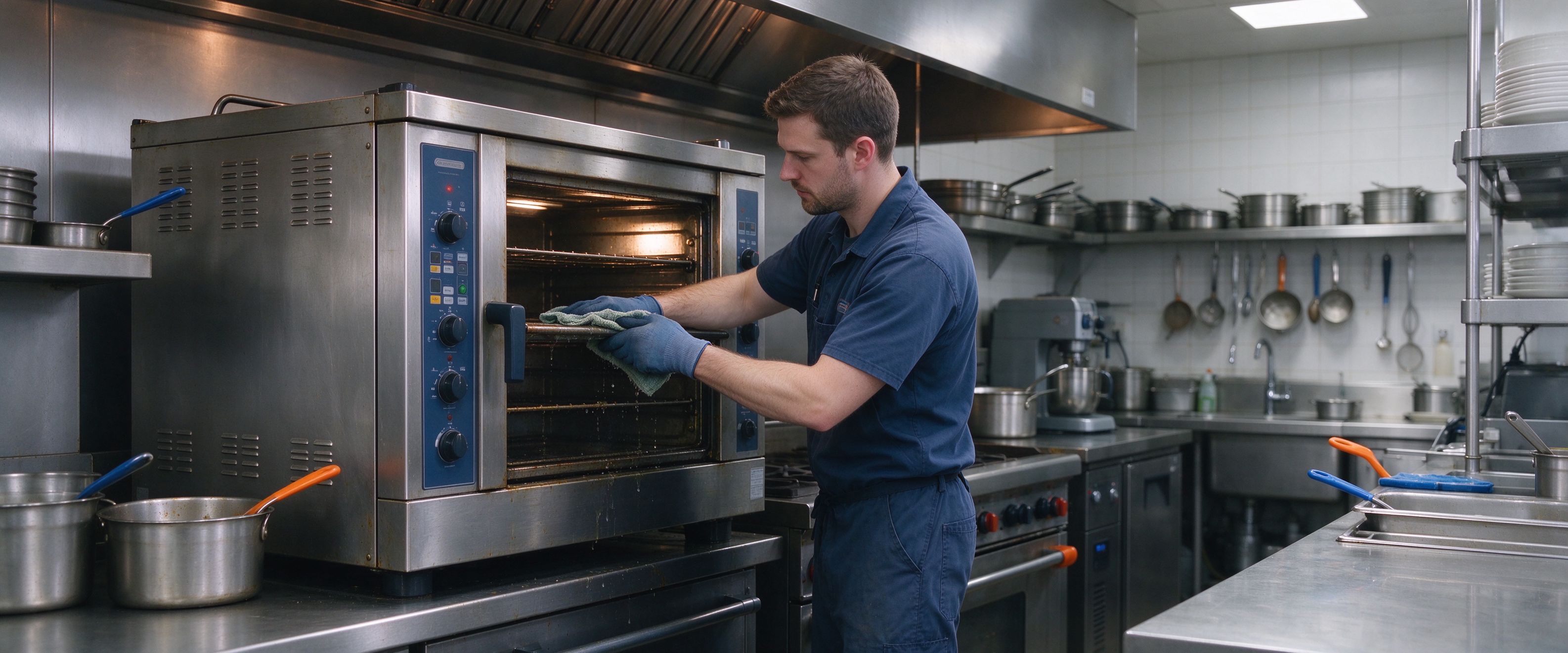
- Clean oven interiors and remove food debris from racks and trays
- Empty and clean fryer baskets, sediment trays, and drip pans
- Wipe down refrigerator exteriors and clean up spills immediately
- Clean griddle surfaces with appropriate scraper and oil
- Sweep and mop floors around equipment
Weekly Deep Cleaning
- Deep clean oven interiors, including racks, fans, and heating elements
- Boil out fryers with approved cleaning solution
- Clean refrigerator condenser coils (more on this below)
- Descale coffee machines and steamers
- Clean ventilation hood filters
- Inspect and clean door gaskets on refrigeration units
MightyChef tip: Never use abrasive cleaners or steel wool on stainless steel — they scratch the surface and can lead to corrosion. Use soft cloths and food-safe stainless steel cleaner.
2. Oven and Range Maintenance
Ovens and ranges are workhorses in any commercial kitchen. Proper maintenance ensures even cooking and prevents breakdowns during peak service.
Daily
- Wipe down exterior surfaces after each service
- Remove food debris from oven interior
- Clean burner grates and caps on gas ranges
- Check pilot lights on gas equipment
Weekly
- Deep clean oven interior, racks, and fan covers
- Inspect door gaskets for wear or damage
- Check oven door alignment and seal
- Clean convection oven fan blades if accessible
Monthly
- Calibrate oven temperature with an oven thermometer
- Inspect gas connections for leaks (use soapy water solution)
- Check electrical connections for signs of overheating
- Lubricate door hinges if required
- Inspect heating elements for wear or damage
Signs Your Oven Needs Service
- Uneven cooking or baking
- Longer preheat times than usual
- Unusual noises during operation
- Door doesn't seal properly
- Gas smell or pilot light issues
3. Refrigeration Maintenance
Refrigeration is critical for food safety. A malfunctioning refrigerator can lead to spoiled inventory and health code violations.
Daily
- Check and record temperatures (coolers: 34-40°F / 1-4°C, freezers: 0°F / -18°C or below)
- Wipe up spills immediately to prevent ice buildup
- Ensure doors are fully closed and not propped open
- Check door gaskets for proper seal
Weekly
- Clean condenser coils with a soft brush or vacuum — this is the single most important maintenance task for refrigeration
- Clean evaporator drain pans and ensure drain lines are clear
- Inspect and clean door gaskets with mild detergent
- Check for ice buildup on evaporator coils
Monthly
- Defrost manual-defrost freezers if ice buildup exceeds 1/4 inch
- Inspect fan motors and blades for proper operation
- Check refrigerant lines for frost or oil leaks
- Verify temperature calibration with a separate thermometer
- Clean and inspect condenser fan
MightyChef tip: Dirty condenser coils are the #1 cause of refrigeration failure. Clean them every 2-4 weeks — it takes 10 minutes and can prevent thousands in repairs and food loss.
4. Fryer Maintenance
Fryers require regular maintenance to ensure food quality and prevent fires.
Daily
- Filter oil after each service (or more frequently for high-volume use)
- Clean fryer baskets and sediment tray
- Wipe down exterior surfaces
- Check oil level and quality
Weekly
- Boil out fryer with approved cleaning solution
- Clean fryer interior thoroughly
- Inspect heating elements or gas burners
- Check thermostatic calibration
Monthly
- Inspect gas lines and connections for leaks
- Check pilot light and flame pattern
- Inspect fryer tank for cracks or damage
- Verify oil temperature accuracy
Oil Management Best Practices
- Filter oil daily to extend its usable life
- Replace oil when it becomes dark, foamy, or develops off-flavors
- Never mix old and new oil
- Keep oil at proper level — don't overfill or underfill
- Allow oil to cool properly before filtering or disposal
5. Dishwasher Maintenance
A commercial dishwasher ensures proper sanitation and reduces labor. Regular maintenance prevents poor cleaning results and breakdowns.
Daily
- Clean wash and rinse arms — ensure spray holes are not clogged
- Empty and clean scrap trays and filters
- Wipe down door gaskets and interior
- Check chemical levels and refill as needed
- Leave door slightly ajar overnight to air dry
Weekly
- Delime dishwasher with approved descaler
- Clean water tank and remove mineral deposits
- Inspect wash and rinse arms for proper rotation
- Check door gaskets for wear
Monthly
- Inspect water inlet valve and screens
- Check drain solenoid and pump
- Verify wash and rinse temperatures (wash: 150-160°F / 65-71°C, rinse: 180°F / 82°C for high-temp machines)
- Inspect chemical feed tubes and pumps
6. Preventive Maintenance Schedule
Create a formal preventive maintenance schedule and assign responsibilities. Here's a sample schedule:
| Frequency | Tasks | Assigned To |
|---|---|---|
| Daily | General cleaning, temperature checks, oil filtering | Kitchen staff |
| Weekly | Deep cleaning, coil cleaning, gasket inspection | Kitchen staff / Maintenance |
| Monthly | Calibration, gas leak checks, electrical inspection | Maintenance technician |
| Quarterly | Professional inspection, belt replacement, lubrication | Qualified technician |
| Annually | Full service, refrigerant check, major component inspection | Qualified technician |
7. Essential Maintenance Tools and Supplies
Keep these items on hand for regular maintenance:
- Stainless steel cleaner and polish
- Food-safe degreaser
- Oven cleaner (commercial grade)
- Fryer boil-out solution
- Dishwasher descaler
- Condenser coil brush
- Oven thermometer
- Refrigerator thermometer
- Soap solution for gas leak detection
- Soft cloths and non-abrasive sponges
- Replacement gaskets and filters
- Lubricants (food-safe where required)
8. Common Mistakes to Avoid
- Using abrasive cleaners — Scratches stainless steel and damages surfaces
- Ignoring condenser coils — Leads to compressor failure and high energy bills
- Overloading equipment — Reduces efficiency and causes premature wear
- Blocking ventilation — Equipment needs proper airflow for cooling
- Delaying repairs — Small issues become expensive breakdowns
- Using wrong chemicals — Can damage equipment and contaminate food
- Skipping calibration — Leads to inconsistent cooking and food safety issues
- Neglecting gaskets — Worn gaskets cause energy loss and temperature fluctuations
9. When to Call a Professional
While regular maintenance can be handled by your staff, some tasks require a qualified technician:
- Refrigerant recharge or leak repair
- Gas line repair or adjustment
- Electrical component replacement
- Compressor or motor replacement
- Control board or thermostat replacement
- Major structural repairs
- Equipment that's still under warranty (DIY repairs may void warranty)
10. Maintenance Record Keeping
Maintain detailed records for each piece of equipment:
- Purchase date and warranty information
- Maintenance schedule and completed tasks
- Repair history and parts replaced
- Temperature logs for refrigeration
- Calibration records
- Service technician contact information
Good records help you track equipment performance, identify recurring issues, and make informed decisions about repair vs. replacement.
Final Thoughts
Proper maintenance is the key to maximizing the lifespan and performance of your commercial kitchen equipment. A small investment of time and effort in regular cleaning and preventive maintenance pays off through reduced repairs, lower energy costs, consistent food quality, and years of reliable service.
At MightyChef, we design our equipment for easy maintenance and long-term durability. Every piece of equipment comes with detailed maintenance instructions and access to our technical support team. We're committed to helping you get the most out of your kitchen equipment investment.
About MightyChef
Guangzhou MightyChef Catering Equipment Co., Ltd. is a professional manufacturer of commercial kitchen equipment based in Guangzhou, China. With over 15 years of experience and an 8,000+ square meter factory, we supply a comprehensive range of Western kitchen equipment, bakery equipment, food processing machines, refrigeration equipment, and beverage equipment to customers in over 50 countries.
Our equipment is built with heavy-duty stainless steel and quality components, designed for easy maintenance and long-term commercial use. We offer OEM/ODM services, competitive factory-direct pricing, and reliable after-sales support including spare parts supply and technical assistance. Contact us today to learn more about our equipment and maintenance support.
FAQs
How often should I clean condenser coils on my refrigerator?
For most commercial kitchens, clean condenser coils every 2-4 weeks. In dusty or greasy environments, clean more frequently. This simple task can extend compressor life by years.
How long should commercial kitchen equipment last?
With proper maintenance, quality commercial equipment typically lasts 10-15 years. Cooking equipment like ranges and ovens can last 15+ years, while refrigeration compressors typically last 10-12 years.
Can I perform maintenance myself, or do I need a professional?
Daily and weekly cleaning tasks can be handled by kitchen staff. Monthly calibration and quarterly inspections should be done by a qualified technician. Always use professionals for gas, electrical, and refrigerant work.
What's the most important maintenance task for refrigeration?
Cleaning condenser coils is the single most important task. Dirty coils cause the compressor to work harder, use more energy, and fail prematurely. Clean them every 2-4 weeks with a soft brush or vacuum.
How often should I replace fryer oil?
Oil lifespan depends on usage volume and food types. As a general guideline, filter daily and replace oil every 1-2 weeks for high-volume fryers, or when oil becomes dark, foamy, or develops off-flavors.
Does MightyChef provide maintenance support?
Yes! We provide detailed user manuals with maintenance instructions, video tutorials, spare parts supply, and responsive technical support to help you maintain your equipment properly.